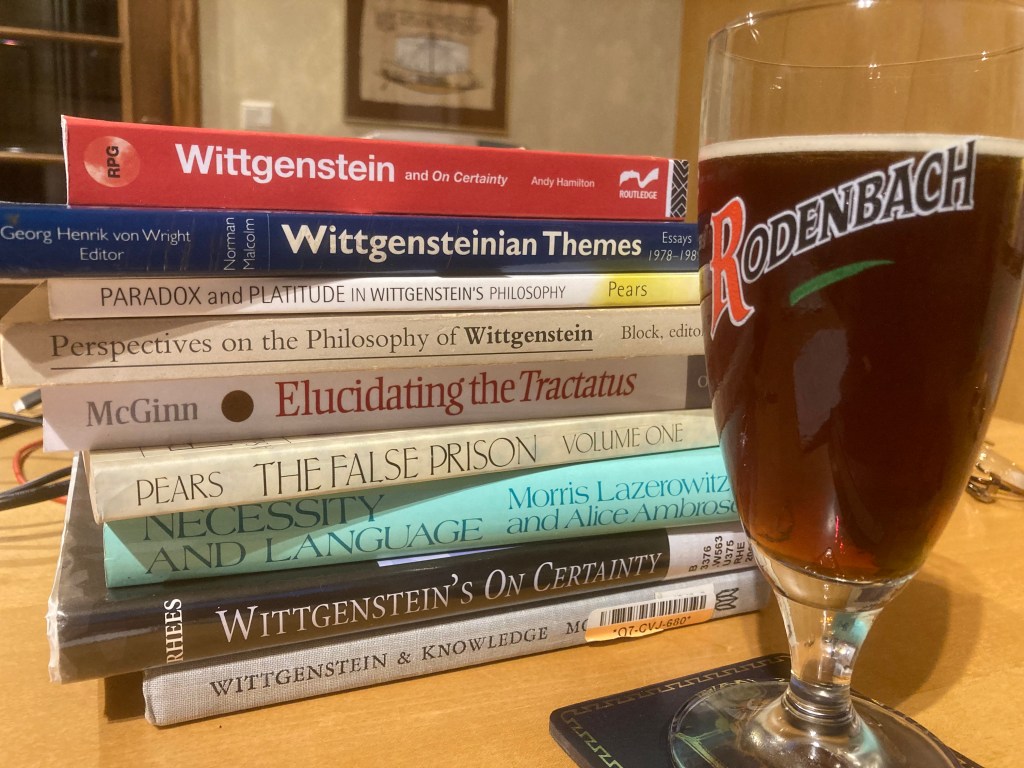
Here are some of my ongoing strands of research in philosophy and bioethics. My work on moral disagreement is being pursued as part of the Wellcome-funded ANTITHESES research platform, which brings together a number of research teams working from different disciplinary perspectives. I am a postdoctoral researcher in the ANTITHESES team of the University of Oxford’s Ethox Centre, a research centre for ethics and healthcare.
Moral Disagreement
I am interested in developing new ways of understanding the nature of moral disagreement itself, which in turn is to key to developing new methods of resolving our most radical and intractable disagreements in the moral and political sphere. In my view, moral disagreement and moral argument must fundamentally be understood in humanistic terms: they point to the question of what it means to understand another person and their words or silences.
My most recent article on moral disagreement was published in Synthese in 2025, for a topical collection on ‘Wittgenstein and Moral Deep Disagreements’. In my article, I examine how we cannot understand the disagreements on the deeper end by looking at the subject matter alone. Beyond the usual arguments on different sides lie radically different standards of what counts as good reasoning in the first place, and different normative structures of thought.
I am currently working on a new set of papers:
1) understanding the nature of moral perception and moral aspect perception, which will draw on Kantian and Wittgensteinian views of perception;
2) re-evaluating the role of the imagination and narrative in moral argument, as forms of reasoning that have typically been neglected by many (but not all) post-Enlightenment approaches to reasoning and argumentation;
3) drawing on Anscombe’s thought on intentions and omissions to develop a novel account of social silences–because some radical disagreements are products of what is systematically not said, rather than said, and a more finegrained taxonomy of different silences and different forms of silencing is needed;
4) reappraising the logic of practical reasoning and, in particular, practical inference, to show the importance of bodily knowledge and one’s life narrative for making sense of action and moral decision as rationally intelligible.
My work tends to be driven by my reading of historical thinkers, even as it seeks to engage with contemporary questions and debates concerning moral reasoning and disagreement. Some of the thinkers I am interested in are Pascal, Nietzsche, Vico, Iris Murdoch, and of course, Wittgenstein and Anscombe. I am also interested in applying my theoretical insights to understudied areas of bioethics such as mental health ethics and conscientious objection.
Wittgenstein and Anscombe
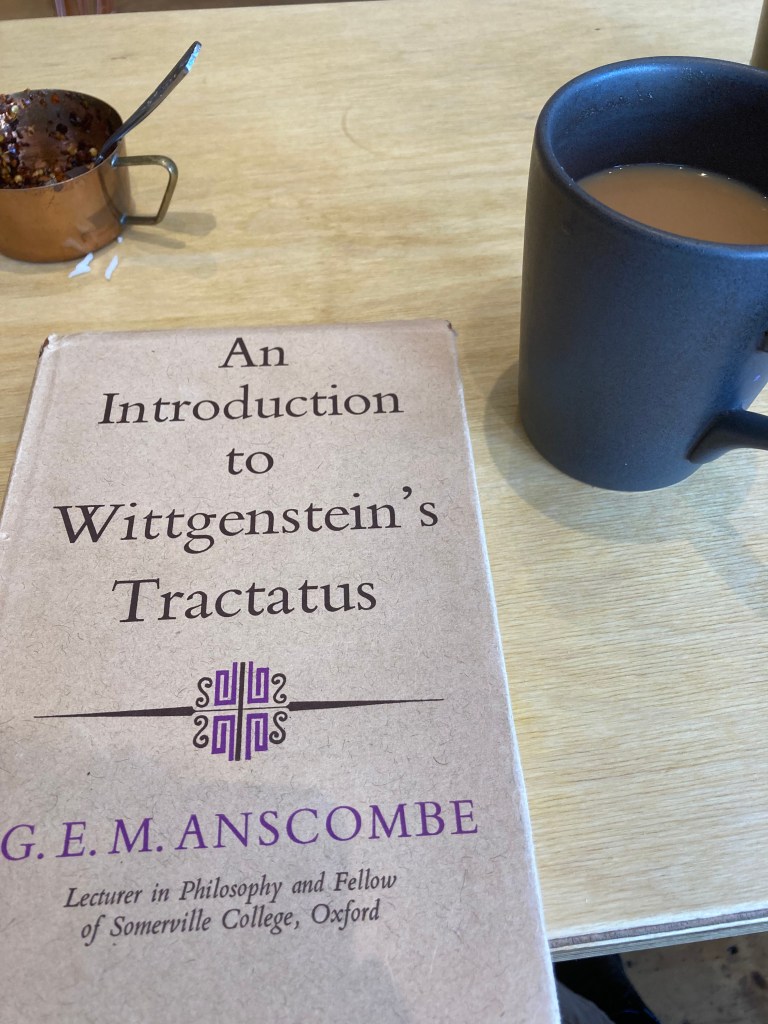
Wittgenstein and Anscombe form the core of my interest in historically-informed philosophy. I wrote my PhD thesis on ‘Action and Necessity: Wittgenstein’s On Certainty and the Foundations of Ethics‘ (supervised by Prof. Andy Hamilton), which I defended in February 2024. Part I of the thesis is a study in the history of philosophy: I defend what I call a ‘Tractarian Reading’ of On Certainty, suggesting that Wittgenstein’s post-Philosophical Investigations thought on the certainty that is expressed in quasi-empirical propositions should be read alongside the concerns of the Tractatus. This offers us a path towards a more praxis-oriented realism in Wittgenstein’s later philosophy, or a ‘realism without empiricism’ as Anscombe once put it. Part II of the thesis draws out the implications of this reading of Wittgenstein for ethics and moral philosophy. Anscombe appears very much as a key protagonist in my account, which engages with her thinking on practical reasoning and practical knowledge.
I have continued work on these two thinkers through a variety of papers. I have recently completed a book chapter on Anscombe’s account of connatural moral knowledge, which was an invited contribution to an edited volume on Elizabeth Anscombe and the Christian Intellectual and Moral Tradition. In my chapter, I argue that Anscombe saw moral epistemology, rather than metaphysics, as key to understanding the nature of objective moral demands and prohibitions. I have also been working on Anscombe’s approach to philosophy of religion, and in May 2025 I gave a paper at Oriel College, Oxford on Anscombe’s reappraisal of Anselm’s ontological argument, which she regarded as non-ontological, drawing on both published and unpublished writings of Anscombe’s. I am submitting this paper for publication soon.
In January 2026 I presented a paper at the University of Southampton on the influence of Schopenhauer and Wittgenstein on Anscombe’s moral philosophy, and in particular her use of the term ‘mystical’ in her analysis of moral prohibitions. In October 2025 I gave a guest lecture at the International Theological Institute in Trumau, Austria on the John Henry Newman’s An Essay in Aid of a Grammar of Assent and its anticipation of key Wittgensteinian ideas–Wittgenstein was known to admire that work of Newman’s, and refers to it in the very first remark of On Certainty, though little has been written on the substantive philosophical ties between both thinkers. I am continuing work on turning these papers into articles.
Philosophy of Biology and Bioethics
I am interested, broadly speaking, in approaches to bioethical questions informed by developments in the philosophy of biology. I am particularly influenced by Evo-Devo philosophy of biology and its revival of the organism as a key explanatory tool in developmental biology.
My first attempt at cross-dialogue between philosophy of biology and bioethics was a paper on ‘Liminal Bioethics for Liminal Statuses‘, published in Bioethics in 2026. In that paper, I look at the ontological status of cell lines and organoids, arguing that they occupy a liminal status between organism and body part–a status that can only be fully understood with a robust philosophy of biology.
In October 2026, I was invited to give a response to a paper on brain death at a seminar in Blackfriars Hall, Oxford–a topic that I have a longstanding interest in. In my response, I attempted to apply the insights of Evo-Devo philosophy to the question of brain death and whether the assumption that the brain is the central integrator of the body commits the mereological fallacy. I hope to resume work on this topic in the near future.
 Michael Wee