Undergraduate Teaching
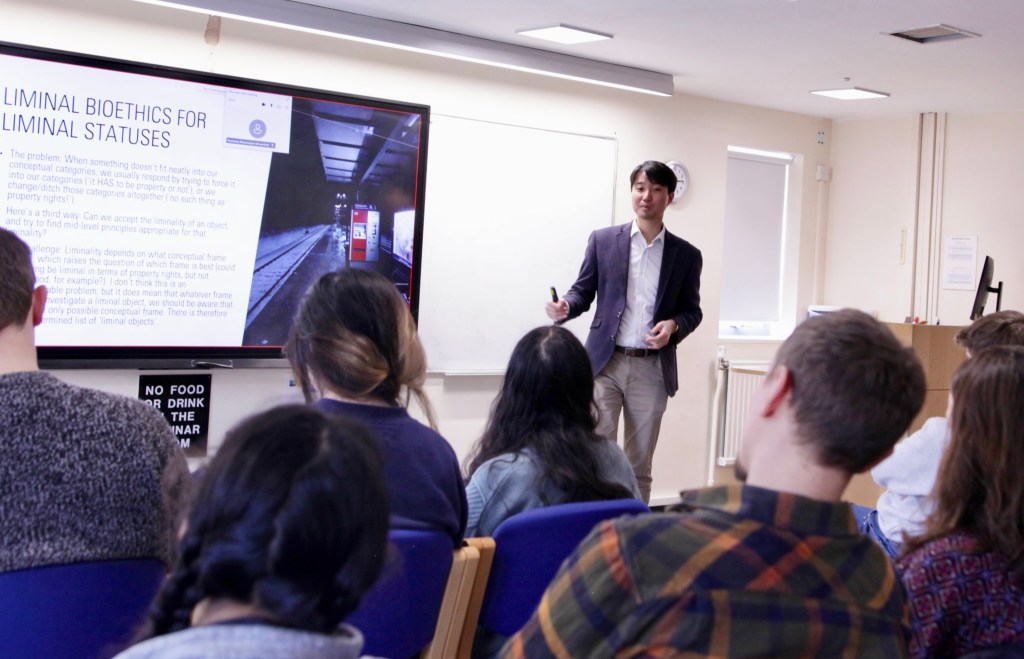
I have been teaching philosophy undergraduates since 2021, with a firm belief that philosophy is a fundamentally dialogical endeavour. While reading and writing tend to be at the core of assessment at universities, and for good reason, I believe it is an important not to lose sight of philosophy as a living conversation, with peers as much as with past authors.
At Durham University, where I was a PhD student, I taught tutorials in Knowledge & Reality and Ethics & Values, both first-year courses. I also gave guest lectures for higher-level courses, namely Language, Logic & Reality (on Kripke) and 20th Century European Philosophy (on Wittgenstein).
At the University of Oxford, I have taught the following Philosophy FHS papers on request:
- The Philosophy of Wittgenstein
- Philosophy of Religion
I have also taught the following tailor-made courses for Visiting Students:
- Bioethics
- Reason, Action, and the Imagination (a comparative philosophy course centred on Pascal’s Pensées)
I have also supervised essay projects for a number of medical students studying the Bioethics SST at the University of Oxford.
Neuroethics Winter School
In 2025, together with colleagues from the Neuroscience, Ethics & Society (NEUROSEC) research group at the University of Oxford, I helped to launch the Oxford Winter Neuroethics School (OWNS), a winter school course in the ethics of neuroscience, psychiatry, and mental health. OWNS is a unique, interdisciplinary course, with the goal of teaching research methods, both normative and empirical, from different disciplines relevant to neuroethics, and promoting critical reflection on how to integrate methodologies for genuine interdisciplinary research in neuroethics. It is aimed at graduate students and early-career researchers and professionals, though we also take in a small number of mid-career and senior academics and professionals. Admissions are competitive and evaluated by an interdisciplinary panel of Oxford University academics. (The course is administered by the University of Oxford Department of Psychiatry, though it does not provide any degree credits.)
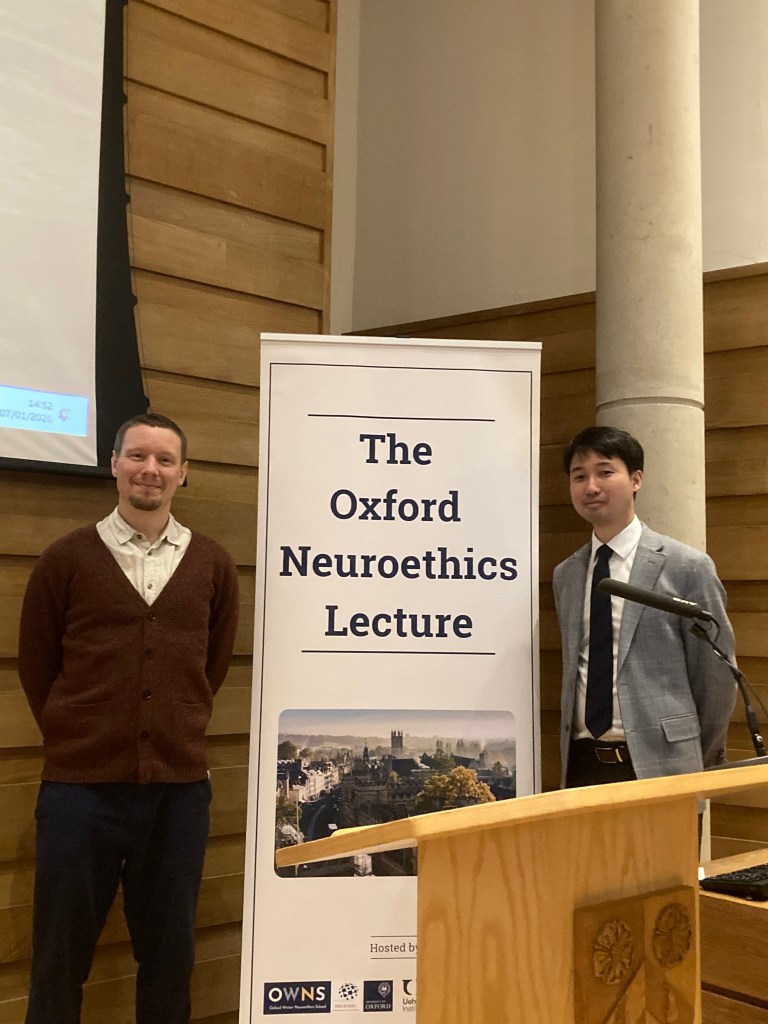
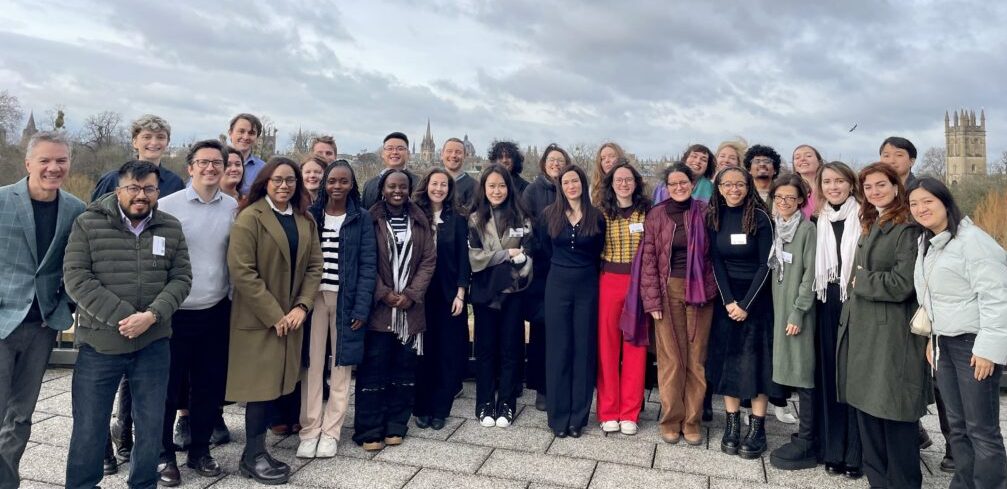
I was the course’s inaugural Deputy Director and taught on the course alongside a fantastic team of academics from different disciplines and institutions. Our inaugural cohort (pictured below), who came from over 15 different countries, began their online modules in November 2025, and met up in person in January 2026 in Oxford for the in-person Learning Accelerator to continue their exchange of ideas and research proposals. A good number of our participants were supported by scholarships generously funded by Dana Foundation in the US, for which we are grateful, given the importance of ensuring equitable access to opportunities in higher education. The in-person part of the course was also held in conjunction with the inaugural edition of The Oxford Neuroethics Lecture, the first public lecture series on neuroethics in the UK, which I also helped to start up and was pleased to host at my college, Wolfson. The lecture series aims to provide in-depth, scholarly reflection on urgent neuroethical issues of great public interest, communicated in an accessible and engaging fashion. We were pleased that our inaugural Lecturer for this occasion was Prof. Marcello Ienca from the Technical University of Munich, who is also President of the International Neuroethics Society. Prof. Ienca spoke on the ethics of technologies that can decipher the content of brain states (so-called ‘mind-reading’).
OWNS is now open for its second year of admissions. I have stepped back from my Deputy Director role and am now an Academic Advisor to the course, and will continue teaching on it this winter. I also look forward to welcoming people to the 2nd Oxford Neuroethics Lecture, which will be held in January 2027.
 Michael Wee